01
Legal (civil) wedding or symbolic ceremony
A legally valid marriage in Montenegro is concluded before the competent local authority, with the civil registrar (matičar). The Family Law states that marriage is concluded by the consent of a woman and a man given before the competent authority, so a church wedding or a planner-led ceremony on its own does not create a civil marriage.
That is why many international couples choose one of two routes: a civil wedding in Montenegro with the full paperwork, or a legal marriage at home followed by a symbolic ceremony on the Bay of Kotor or in Budva. A symbolic ceremony gives you complete freedom over place, time and language, but it has no legal effect.
02
Wedding in Montenegro: legal requirements under the Family Law
Under the Family Law, the couple files an application to marry with the registrar and attaches a birth register extract for each partner, plus other documents if needed. The registrar checks from their statements and documents whether the legal conditions are met, and sets the date and time of the wedding in agreement with the couple.
A person under 18 cannot marry (with court-approved exceptions), nor can someone who is already married. Two witnesses attend, and any legally capable adult can be a witness. The ceremony starts by confirming the identity of both partners. If the couple fails to appear at the agreed time without a valid reason, the application is treated as withdrawn.
03
Documents for foreigners
The exact list depends on your nationality and the municipality, and municipalities may ask for additional documents. Commonly requested are a passport, a birth certificate, proof of single status or a certificate of no impediment to marriage, and for divorced or widowed partners a final divorce decree or a death certificate. Foreign documents generally need an apostille or legalisation and a translation into Montenegrin.
Examples from official guidance: the Dutch government says you need a declaration of marital status, translated and legalised, and an international birth certificate issued within the last six months. The Australian Embassy in Belgrade says Australians must obtain their certificate of no impediment from that embassy specifically, with apostilles on the birth certificate and single status record. The UK government publishes a dedicated affidavit or affirmation form on marital status for British nationals marrying in Montenegro.
Wedding planners quote shorter document validity periods than some governments, so the safest approach is to contact the registrar in your wedding municipality and your own embassy before you order any papers, and ask for the list in writing.
04
Timeline and step-by-step planning
Start with the municipality: choose your town, contact the registrar's office, and confirm available dates, the document list, translation rules and whether an interpreter must attend. Then obtain your documents at home, apostille or legalise them and have them translated. As a general rule, allow several months for this stage, because apostilles and translations can take time.
The Family Law text we reviewed sets no minimum waiting period between the application and the wedding, but planners report that documents are usually submitted at least seven days before the ceremony. Confirm the deadline with your municipality. If you do not speak Montenegrin, planners say a certified court interpreter is required; check this with the registrar.
After the wedding, request the marriage certificate and, where possible, an international (multilingual) version. The Dutch government, for example, says the international certificate does not need legalisation for registration in the Netherlands. Register the marriage at home according to your own country's rules.
05
Where ceremonies take place
Under the Family Law, a marriage is concluded in a formal ceremony in a specially furnished official room. Exceptionally, the registrar may allow another suitable place if the couple requests it and gives justified reasons. In practice, a civil ceremony on a hotel terrace, beach or villa is only possible with approval, and fees for weddings outside official premises vary by municipality.
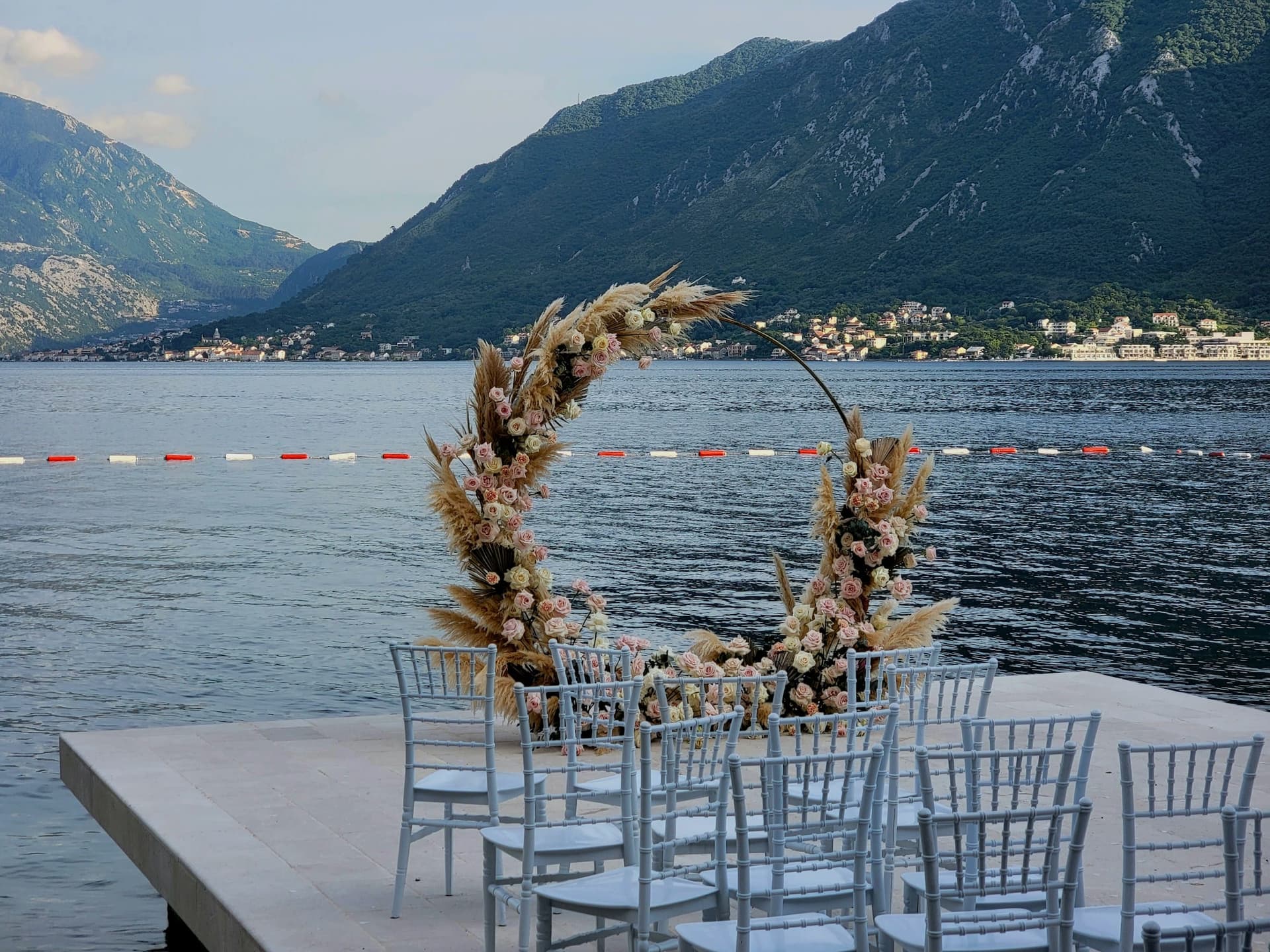
A church wedding is arranged separately with the parish and does not replace the civil marriage. A symbolic ceremony can be held anywhere the venue owner allows.
06
Best season and popular locations for a destination wedding in Montenegro
July and August are the hottest and busiest months on the coast, and accommodation books up fast. June and September are often recommended for good weather with fewer crowds, while May and October bring milder temperatures but slightly less predictable weather.
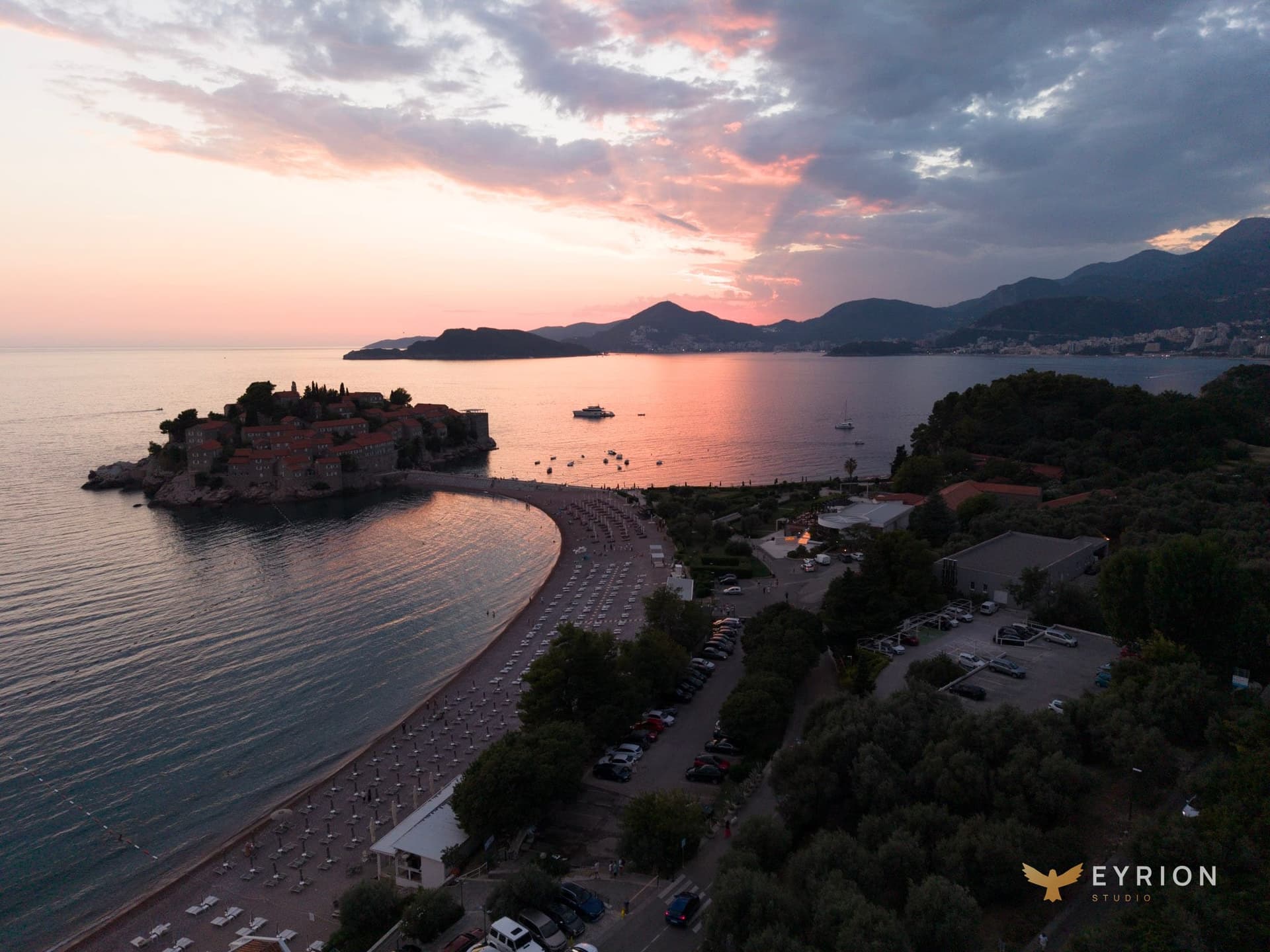
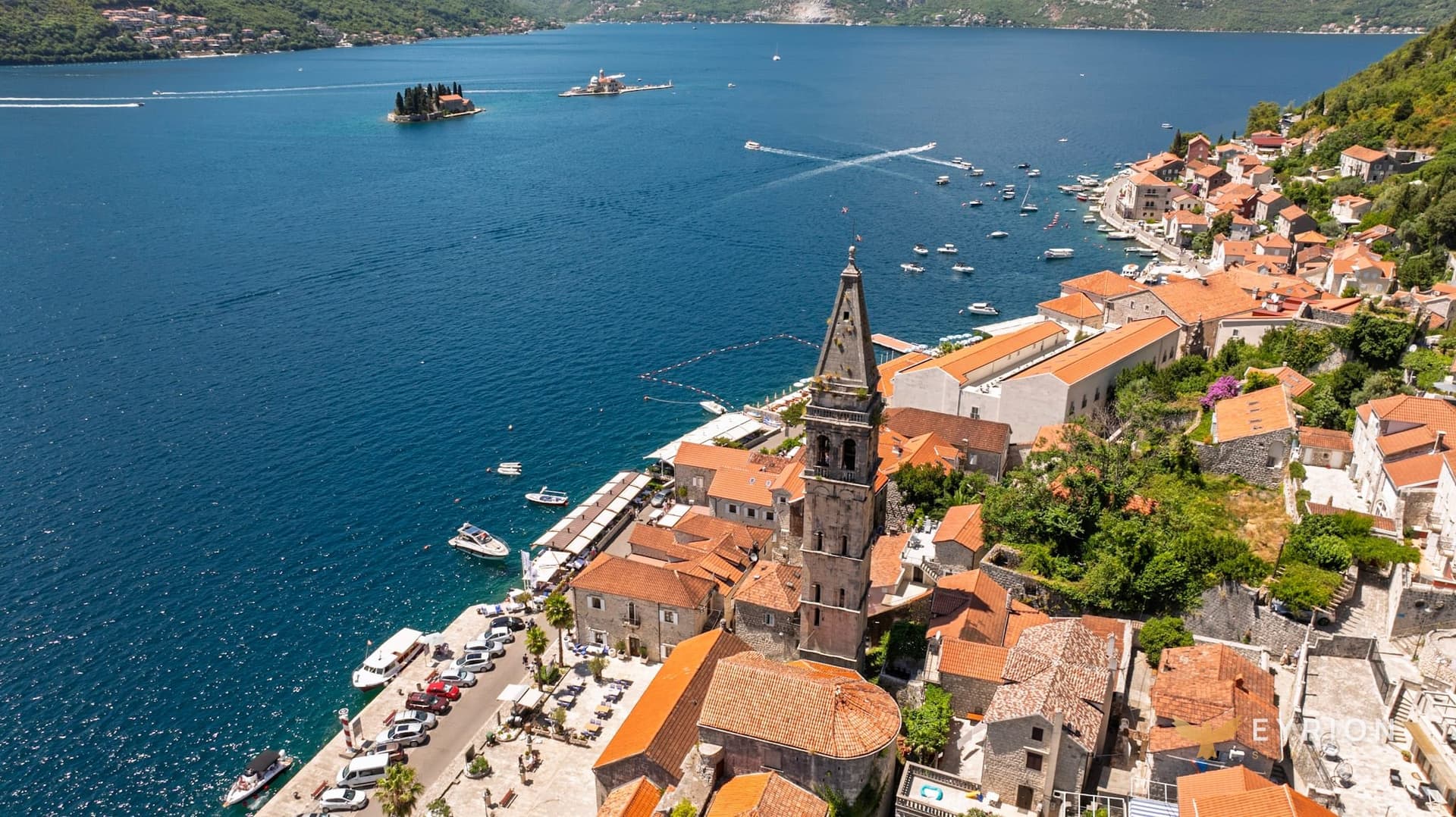
The most requested places are Kotor with its UNESCO-listed old town, baroque Perast facing the islet of Our Lady of the Rocks, Tivat and its marinas, Herceg Novi at the entrance to the bay, and Budva and Sveti Stefan on the open sea. Each belongs to its own municipality, so check civil wedding rules with that municipality.
07
Planning your photography, film and drone coverage
The light is at its best during golden hour, when the sun drops behind the mountains around the Bay of Kotor. In summer, midday is very hot and the old towns are full of visitors, so plan the ceremony and portraits for late afternoon or early morning. As general advice, book your photographer and videographer 6 to 12 months ahead, especially for June and September.
Drone flights in Montenegro are regulated by the Civil Aviation Agency: drones of 250 g or more must be registered, pilots must pass a theory exam and carry insurance, flying over gatherings of people is not allowed in the open category, and the zone around Tivat airport requires air traffic control approval. Some venues also require permission from the owner or management.
Eyrion Studio, based in Podgorica, offers wedding photography, film and aerial drone coverage in Kotor, Perast, Budva, Sveti Stefan, Tivat and Herceg Novi. We are happy to help you align your timeline, light and drone plan with the rules of your venue.